Video Cameras Are Watching Us But Do Little To Help

Look up. Chances are, there is a video camera looking right back at you. If you are walking down the street, reading this on a bus, or shopping in a grocery store, you are being watched.
Video cameras are everywhere today. They are hidden in the corners of ceilings. They are hanging from streetlights. They are even sitting right on our neighbors’ front doors. The tiny, glowing red eyes of these cameras follow us wherever we go.
We accept this because we are told a very comforting story. We are told that cameras keep us safe. We are told that if bad guys see a camera, they will run away. We are told that if a crime does happen, the camera will catch the bad guy and put him in jail.
But what if that story is a lie?
The truth is, video cameras are watching us every single second of the day, but they do very little to actually help us. They do not stop crime. They do not keep us safe. So, if they are not helping us, what are they really doing? And more importantly, why is removing personal info from the web the only real way to protect yourself from them?
The Illusion of Safety
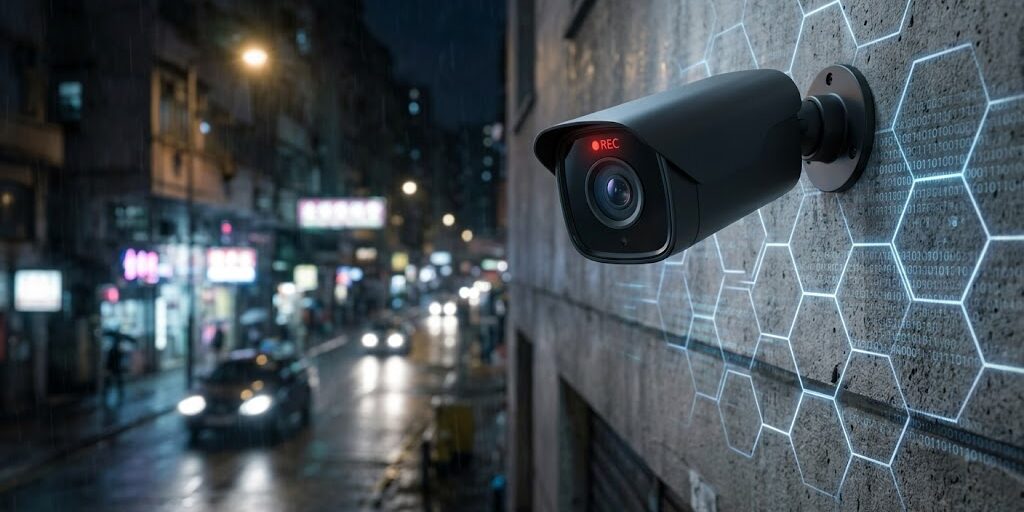
Imagine you are walking down a dark street at night. You feel a little bit scared. Then, you see a bright security camera hanging on a brick wall. Suddenly, you feel better. You think, “I am safe here. The camera is watching.”
This is called the “illusion of safety.” An illusion is a trick of the mind. It makes you feel something that is not real. The camera makes you feel safe, but it has no hands. It cannot jump down from the wall and protect you. It cannot shout for help. All a camera can do is watch.
Real-Life Scenario: The Package Thief
Let’s look at a very common real-life example. Let’s talk about the “porch pirate.” This is a thief who steals packages off your front porch.
Imagine you buy an expensive new video doorbell. You mount it right next to your front door. It records video in crystal clear, 4K high-definition. It cost you two hundred dollars. You feel very smart and very safe.
On Tuesday, the mail carrier drops off a big box. Ten minutes later, a stranger walks up your driveway. The stranger looks right at your brand-new video doorbell. They do not care. They grab the big box and run away to their car.
What Happens Next?
You get an alert on your phone. You watch the video. You see the stranger’s face perfectly. You see the color of their shirt. You feel angry, but you also feel proud. You think, “I have them on video! The police will arrest them today!”
You call the police. You give them the video. But the police say they are too busy. They say that even with a clear video, they do not know the stranger’s name. They do not have time to drive around the city looking for a person wearing a red shirt. Your package is gone forever.
The video camera did not stop the thief. The video camera did not get your package back. All the video camera did was give you a movie of yourself getting robbed.
“Cameras do not prevent crimes. They only record them. We are trading our total privacy for a false sense of security that rarely helps us when we actually need it.”
If They Don’t Stop Crime, What Are They For?
This is the most important question we can ask. If cities have millions of cameras, and stores have thousands of cameras, but bad things still happen, why do we keep buying more cameras?
The answer is very simple, and very scary. The cameras are not there to stop crime. The cameras are there to collect data. They are there to watch you.
The Big Business of Watching You
Have you ever wondered everything you need to know about data brokers? Data brokers are giant, rich companies that sell secrets about normal people. They want to know exactly what you do all day so they can sell that information to advertisers.
For a long time, data brokers could only track you on your computer. They watched what websites you clicked on. But that was not enough for them. They wanted to track you in the real world, too. That is where the video cameras come in.
Shopping for Secrets
When you walk into a big, modern grocery store, you are walking into a tracking machine. The cameras on the ceiling are not just looking for shoplifters. They are linked to smart computers.
These smart computers watch how you walk through the store. They see that you stopped to look at the expensive coffee for two minutes, but you did not buy it. They see that you always walk down the candy aisle. They see if you look happy or sad while you shop.
The store takes all this video data and puts it into a giant file about you. They sell this file. This is why removing personal info from the web is so critical. If your name and address are floating around on the internet, the stores and data brokers can easily connect your face in the camera to your real-life identity.
The Terrifying Power of Facial Recognition
A few years ago, you could wear a baseball hat and sunglasses to hide from a camera. You could walk down the street and stay anonymous. Anonymous means no one knows who you are.
Today, being anonymous is almost impossible. The reason is a new technology called “Facial Recognition.”
Your Face is a Barcode
Think about the barcode on a box of cereal. When the cashier scans the barcode, the computer instantly knows it is a box of cereal and knows the exact price. Facial recognition turns your human face into a digital barcode.
When a modern video camera looks at you, it does not just see a picture. A computer program measures your face. It measures the exact distance between your eyes. It measures the shape of your nose. It measures the curve of your jaw.
It turns these measurements into a long string of numbers. This string of numbers is perfectly unique to you. It is like a digital fingerprint. Once the computer has your digital fingerprint, it searches a massive database to find a match.
Where Do They Get the Pictures?
You might ask, “How does the computer know my name? I never gave them my picture!”
The sad truth is, you probably did. Have you ever uploaded a selfie to Facebook or Instagram? Have you ever had a driver’s license photo taken? Giant companies, like Clearview AI, scraped billions of pictures off the internet. They took your pictures without asking.
Now, when you walk past a camera on the street, the camera scans your face, checks the giant database, and instantly knows your full legal name. This is what your digital footprints can reveal about you without your permission.
When the Watchers Get Watched (Hackers)
We are told to trust the companies that put up the cameras. We are told they will keep the videos safe and private. But time and time again, we learn that this is not true. Connecting a camera to the internet makes it incredibly dangerous.
The Hackers Are In The House
Many people buy cheap indoor security cameras. They put them in their living rooms to watch their dogs. Some parents even put them in their babies’ bedrooms to act as baby monitors. These cameras connect to the home Wi-Fi.
Hackers love these cheap cameras. Bad guys sitting in other countries use special software to guess the passwords to these cameras. Once they guess the password, they take control.
There are horrible, true stories of parents walking into their baby’s room, only to hear a stranger’s voice coming through the camera speaker. The stranger was watching the baby sleep. The camera that was supposed to keep the family safe actually invited a monster into the house.
Big Companies Get Hacked Too
It is not just cheap home cameras. Huge, rich companies get hacked as well. A few years ago, a massive camera company called Verkada was hacked. Verkada puts cameras in hospitals, police stations, and large factories.
The hackers broke into Verkada’s systems. Suddenly, the hackers could see live video from thousands of secret cameras. They watched doctors working in hospitals. They watched police officers eating lunch. The cameras were completely useless at stopping the crime of being hacked.
This shows that no video is truly safe. If a video is on the internet, it can be stolen. This is why learning how to keep your family’s digital privacy safe is the most important skill you can learn today.
We Are Spying on Ourselves
Perhaps the strangest part of this whole story is that the government did not force us to put up all these cameras. We bought them ourselves.
We bought the video doorbells. We bought the indoor dog monitors. We bought the smart TVs that have tiny cameras in the screen. We paid our own money to turn our homes into surveillance cages.
The Neighborhood Watch Gone Wrong
Some video doorbell companies have apps where neighbors can share videos. If someone sees a strange dog, they post a video. If someone sees a teenager walking too slowly down the street, they post a video and call the teenager “suspicious.”
Instead of making neighborhoods friendlier, these cameras make people paranoid. Everyone is watching everyone else. Neighbors become spies. We are so busy staring at our phone screens to check our front porch that we forget to go outside and actually say hello to the people who live next to us.
And worst of all, many of these video doorbell companies have secret deals with police departments. The police can often ask the company for your doorbell videos without a judge’s permission. You are paying a monthly fee to let strangers record your front yard.
How Do Data Brokers Use This Against You?
Everything comes back to money. The cameras are collecting massive amounts of video data. Facial recognition programs are turning your face into a barcode. But how does this hurt you?
It hurts you because this data is sold to Data Brokers. Data brokers are companies like Spokeo or Whitepages. They collect your information and sell it to anyone with a credit card.
The Dangerous Connection
Imagine this scenario. A camera at a fast-food restaurant scans your face when you buy a burger. A camera at a hospital scans your face when you visit a sick friend. A camera at a political rally scans your face while you listen to a speech.
The data brokers buy all three of those tracking points. Now, they add it to the file they already have on you. Because you have never focused on removing personal info from the web, the data broker already knows your home address, your phone number, and your email address.
They connect the dots. They say, “John Smith, who lives at 123 Main Street, eats fast food, visits the hospital, and votes for this politician.”
They sell this highly detailed file to health insurance companies. The health insurance company sees you eat bad food and visit the hospital. So, they raise the price of your insurance. You lose money every month, all because a camera watched you buy a burger.
The Solution: You Must Break the Chain
The story sounds very scary. The cameras are everywhere. They are not stopping crime. They are just recording us and selling our secrets. You cannot take a baseball bat and smash every camera on the street. That is illegal.
So, how do you protect yourself?
You protect yourself by breaking the chain. The cameras only work if the computer knows who you are. The computer only knows who you are if your personal information is floating around the internet for data brokers to find.
Step 1: Stop Providing Free Pictures
The first step is to stop making it easy for the facial recognition machines. Stop posting hundreds of selfies on public social media accounts. If you must use Facebook or Instagram, change your settings to “Private” so only your real-life friends can see your photos.
If you don’t believe how easy it is for people to find you, read about how online information makes stalking incredibly easy today.
Step 2: Cover Your Webcams
You have cameras in your own house right now. Your laptop has a camera. Your tablet has a camera. Buy a cheap pack of webcam covers. They are tiny sliding doors you stick over the camera lens. When you are not using the camera on your computer, slide it shut. This is a simple, physical block that hackers cannot beat.
Step 3: Removing Personal Info From the Web
This is the most important step of all. This is how you break the chain and beat the data brokers.
You must erase your identity from the massive people-search websites. You must go to sites like Whitepages, Intelius, and MyLife, and demand that they delete your home address, your phone number, and your family’s names.
The DIY Nightmare
You can try to do this yourself. The law says you have the right to “opt-out.” However, doing it yourself is a nightmare. There are over 150 data broker websites. You have to find all of them. You have to fill out long, confusing forms for each one. You have to send emails and make phone calls.
It takes hundreds of hours. And the worst part? The data brokers will just put your information right back on their website a few months later. They know you will eventually get tired and give up.
Why You Need Wiperts to Fight For You
You should not have to spend your weekends fighting giant tech companies just to keep your home address a secret. You have a family. You have a job. You need a professional to fight for you.
That is why Wiperts.com exists. Wiperts is a professional digital privacy company. We act as your digital bodyguards.
How Wiperts Breaks the Chain
When you hire Wiperts, we take the heavy lifting off your shoulders. We handle the frustrating work so you can relax.
1. We Find Everything
Our advanced software scans the deepest parts of the internet. We find exactly where the data brokers are hiding your personal information. We find your home address, your phone number, and the records they are trying to sell to strangers.
2. We Force Them to Delete It
Our privacy experts go to work. We contact the 150+ data brokers. We know exactly which legal forms to use. We force them to scrub your name from their databases. We focus heavily on removing personal info from the web so that when a street camera scans your face, it connects to an empty file.
3. We Never Stop Watching
Because data brokers are sneaky, they will try to rebuild your file in the future. Wiperts provides continuous, year-round surveillance. If a data broker tries to put your address back on the internet three months from now, our alarms go off. We immediately force them to delete it again.
If you want to understand how important this ongoing battle is, read our full guide on understanding complete online privacy protection.
Conclusion: Do Not Settle for an Illusion
We all want to feel safe. We all want to protect our families. But video cameras hanging on the walls are not the answer. They are an illusion of safety. They watch us, they record us, and they feed our secrets to massive companies that want to make money off our private lives.
True safety does not come from a glowing red camera lens. True safety comes from being anonymous. True safety comes from controlling your own data.
Do not let data brokers treat your life like a product. Break the chain. Focus on removing personal info from the web today. Let Wiperts be your digital shield, and finally take back the privacy that belongs to you.
Break the tracking chain today.
If data brokers don’t have your name, the cameras can’t track you. Let Wiperts remove your personal information from the internet automatically.
Start My Privacy Scan Now