The Power of Privacy
Five thrilling “What If” scenarios that will completely change how you view your digital freedom.
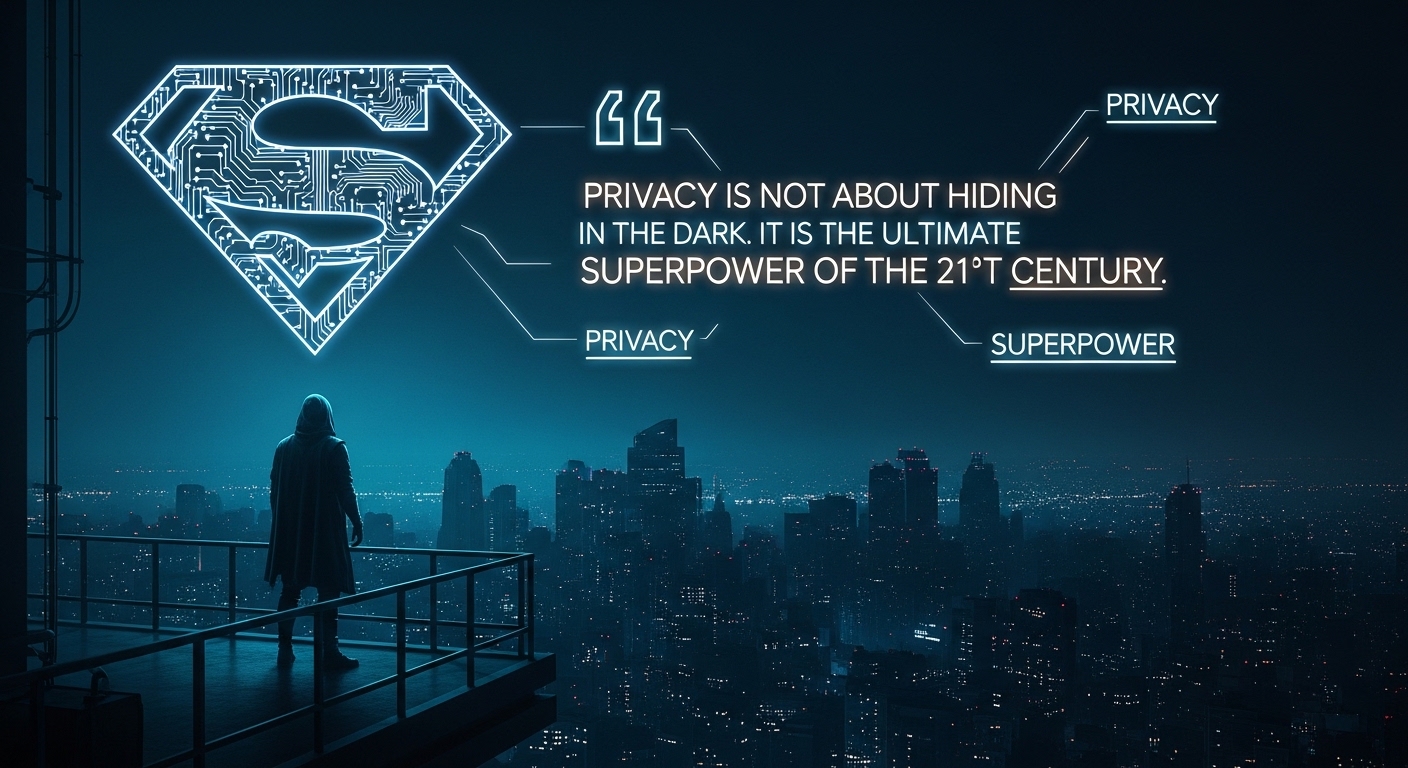
Privacy is not about hiding in the dark. It is the ultimate superpower of the 21st century.
Let’s play a game. The game is called “What If.” It is a game of imagination, a game of alternate realities, and a game that might just scare you enough to change your life forever.
For decades, massive tech companies have tried to convince you that privacy is boring. They want you to think privacy is just a long, confusing legal document you have to scroll past to play a free game on your phone. They have spent billions of dollars pushing a very specific, very dangerous narrative: “If you have nothing to hide, you have nothing to fear.”
They want you to think that caring about your personal information makes you paranoid. They want you to believe that only criminals need privacy. But this is the biggest lie ever sold to the modern public.
Privacy is not about hiding bad things. Privacy is a shield. Privacy is an invisible cloak. Privacy is the ultimate superpower that allows you to walk through the world exactly as you are, without being manipulated, judged, or treated like a product on a grocery store shelf. When you learn the fundamentals of understanding online privacy protection, you aren’t hiding from the world—you are taking control of it.
To truly understand this power, we have to stretch our imaginations. We have to strip away the invisible wires of the internet and look at what is actually happening to our data every single day. We are going to explore five distinct, thrilling, and terrifying “What If” scenarios. By the time we finish, you will never look at your smartphone, your internet browser, or your front door the same way again.
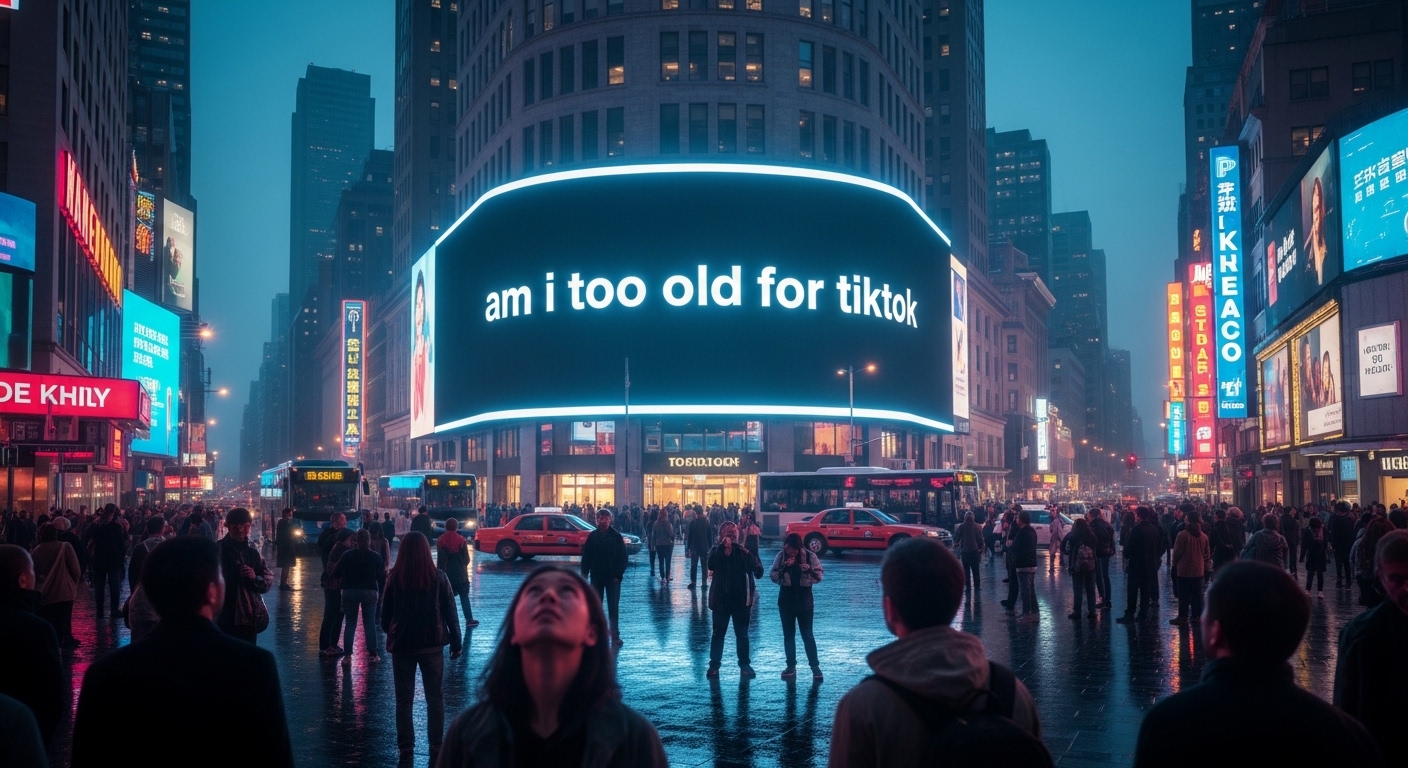
Scenario 1: What If Your Life Was a Billboard?
What if anonymity was physically impossible? Let’s step into our first alternate reality.
Imagine you wake up on a crisp Tuesday morning. You get dressed, grab your coffee, and step out your front door to walk to work. It is a beautiful day. The birds are singing. But as you step onto the sidewalk, you notice something strange floating above your head. It is a bright, glowing, neon digital billboard, hovering just a few feet above your hair, tethered to you like a balloon.
You look up. The billboard is displaying bright, scrolling text for the entire neighborhood to read. It says:
“John Smith. Age 42. Searched for ‘Why does my back hurt when I breathe?’ at 2:14 AM last night. Visited a divorce attorney’s website for 14 minutes yesterday. Currently has $1,240 in his checking account. Voted for the losing candidate in the last election.”
You panic. You try to bat the billboard away, but it follows you. As you walk down the street, you realize everyone else has a billboard, too. You pass your neighbor, Mrs. Higgins. Her billboard flashes: “Searched for cheap wine near me. Spent $400 on mobile puzzle games this month.” You pass your boss. His billboard reads: “Currently researching treatments for hair loss. Looking for a new job.”
The Death of the Private Thought
How would you act in this world? You would be terrified. You would never look up a medical symptom again. You would never ask a ‘dumb’ question. You would never research a controversial topic, explore a new religion, or look for a new job while employed. The fear of judgment would crush your curiosity. You would become a rigid, perfectly boring robot, too afraid of the glowing billboard to ever be yourself.
Here is the horrifying truth: You already have this billboard. It just isn’t hovering over your physical head.
Right now, your internet service provider, your search engine, and thousands of invisible data brokers have compiled this exact billboard of your life. Every 2:00 AM panic search, every weird curiosity, every financial worry is recorded, categorized, and placed into a digital file with your name on it. If you want to know how deep this goes, you must understand exactly what your digital footprints reveal about you without your permission.
They sell this billboard to health insurance companies. They sell it to political campaigns. They sell it to advertisers who want to target you when you are feeling sad or vulnerable. The billboard exists; it is just visible to algorithms and corporations instead of your neighbor Mrs. Higgins.
The power of privacy is the power to shatter that billboard. When you use virtual private networks (VPNs), secure browsers, and data-scrubbing services, you are taking a baseball bat to the neon lights. You are reclaiming the ultimate human right: the right to be curious in the dark, the right to wonder, and the right to figure out who you are without an audience taking notes.
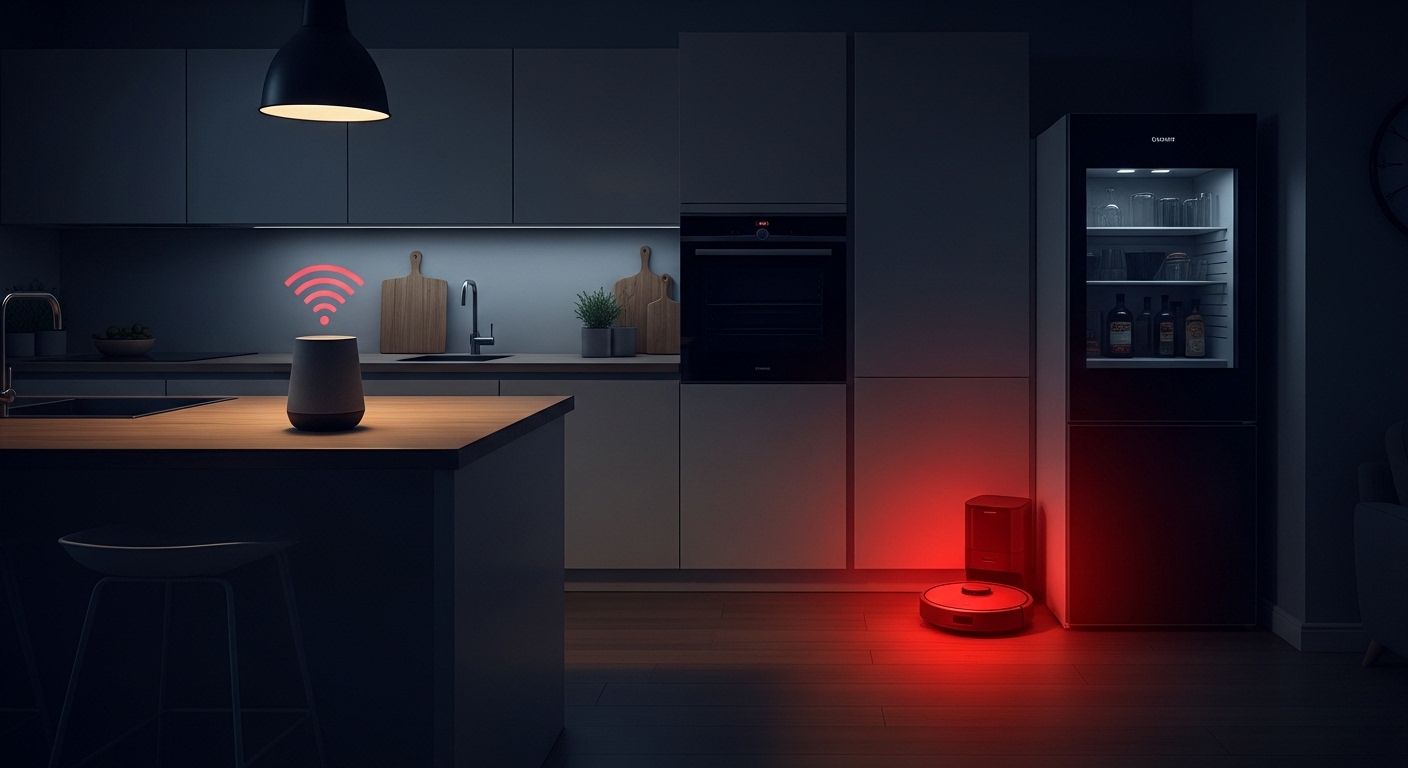
Scenario 2: What If Your House Was a Spy?
Let’s play “What If” again. We are moving from the public street into the most private sanctuary on earth: your home.
What if you invited a stranger to live in your house for free? He is a very polite stranger. He wears a nice suit. He stands quietly in the corner of your kitchen. If you ask him what the weather is going to be tomorrow, he tells you instantly. If you ask him to turn on the lights, he flips the switch for you. He is very helpful.
But there is a catch. The stranger holds a clipboard. 24 hours a day, 7 days a week, he writes down everything he hears. He writes down the argument you have with your spouse about money. He writes down the lullaby you sing to your baby. He writes down the exact time you go to sleep, the exact time you wake up, and how many times you open the refrigerator.
At the end of every week, the polite stranger takes his clipboard, walks out the front door, and hands copies of your life to fifty different companies who use it to try and sell you marriage counseling, sleeping pills, and diet plans.
The Trojan Horse in the Living Room
You would never allow a human being to do this. You would throw him out of your house immediately. Yet, millions of people have paid their own hard-earned money to bring this exact spy into their living rooms. We just call it a “Smart Home.”
We buy smart speakers that must constantly listen to our conversations to hear their “wake words.” We buy smart refrigerators that track our eating habits. We buy internet-connected televisions that use Automatic Content Recognition (ACR) to take literal screenshots of what we are watching every three seconds to send back to advertisers.
Your home used to be a fortress. When you locked the front door, the world stayed outside. But the internet of things (IoT) has turned our homes into massive, leaky data faucets. If you want a deep, chilling look into this, read our multi-part investigation into how smart homes are huge data mines.
The power of privacy here is the power of boundary-setting. It is the awesome ability to look at a “convenient” piece of technology, realize the price tag is your family’s intimacy, and say, “No thank you. I can turn off my own lights.” It is the power to ensure that when your front door closes, the walls of your home belong entirely to you.

Scenario 3: What If an Algorithm Was Your Boss?
Let’s dive into a “What If” scenario that hits right in the wallet. What if human empathy was completely removed from the world of money, replaced entirely by cold, hard data?
Imagine you have worked hard your entire life. You are applying for a mortgage to buy your dream house. You go to the bank, wearing your best suit. You sit down across from the loan officer. You have a great job and a good salary. You smile, ready to shake hands and sign the papers.
The loan officer doesn’t look at your salary. Instead, he types your name into a computer. The computer hums for a second. The screen turns red.
“I’m sorry,” the loan officer says. “Your mortgage is denied.”
“Why?” you ask, shocked. “I make plenty of money!”
“Well,” the loan officer sighs, looking at his screen. “Our algorithm bought your data from a grocery store loyalty card. It shows you buy a lot of bacon, frozen pizza, and sugary soda. Because of your poor diet, our algorithm predicts you will likely suffer a heart attack in the next five years, lose your job, and default on this loan. Have a nice day.”
The Invisible Judge and Jury
This sounds like a science fiction movie. It sounds like a dystopian nightmare where you are punished for crimes you haven’t even committed yet. But the terrifying reality is that we are inches away from this world, and in some industries, we are already there.
This is the dark side of Big Data. It is called “Predictive Analytics.” When you don’t care about privacy, data brokers collect billions of tiny puzzle pieces about your life. If you don’t know who these companies are, you must learn everything you need to know about data brokers immediately.
These brokers feed your puzzle pieces into massive artificial intelligence machines. These machines do not care about your heart, your soul, or your intentions. They only care about statistics. If your internet searches, your driving apps, and your shopping habits match the profile of someone who is “high risk,” you can be shadow-banned from the best parts of life.
Airlines already use your browsing cookies to practice “Dynamic Pricing,” jacking up the price of a plane ticket if they know you are desperate to fly home for the holidays. Health insurance companies are constantly trying to buy wearable fitness tracker data to adjust your premiums. The algorithm is already acting as judge, jury, and executioner on your wallet.
The power of privacy is the ultimate shield against the algorithm. When you actively block trackers, clear your cookies, and demand your data be erased from public view, you blind the machine. You force banks, insurance companies, and airlines to treat you as a human being, on a level playing field, rather than a predictable statistic. You take your financial destiny out of the hands of the code.
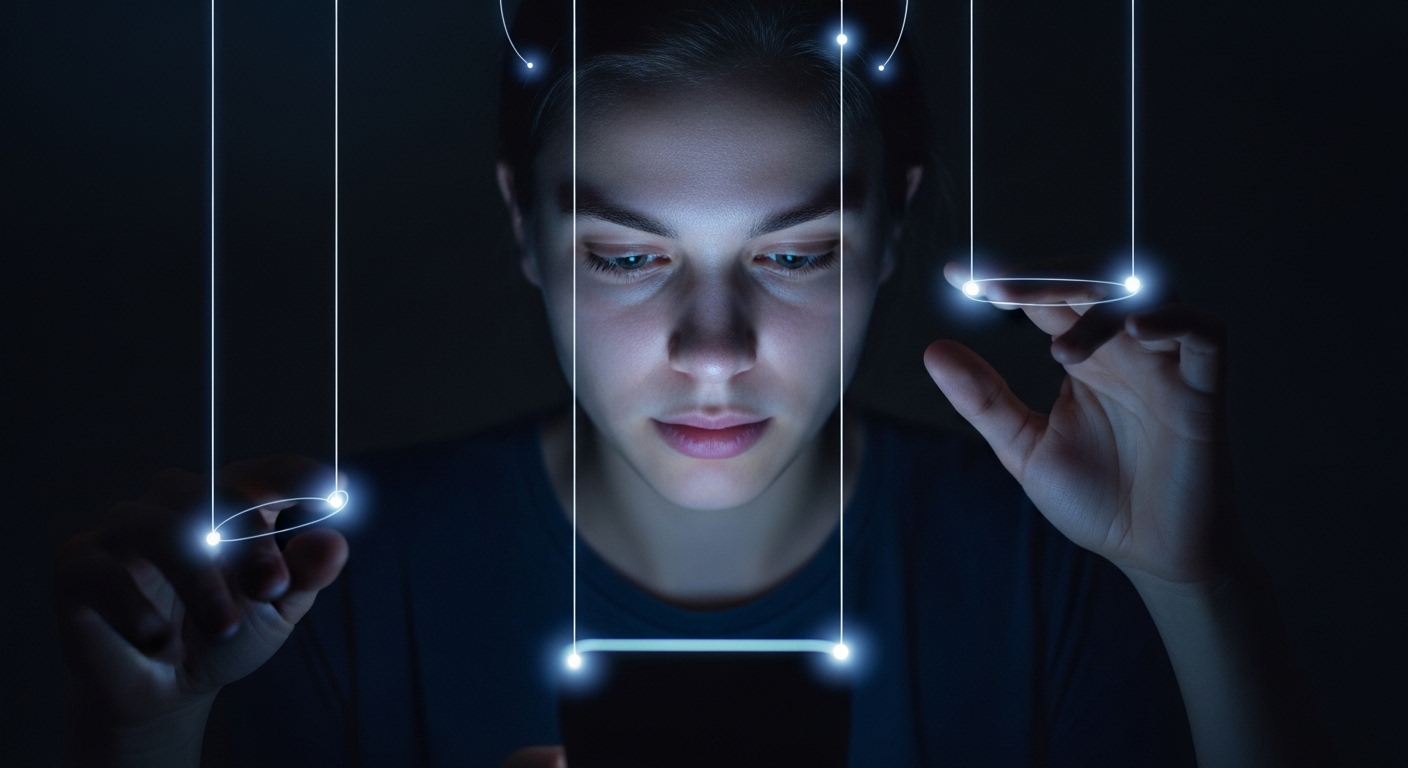
Scenario 4: What If a Stranger Knew How to Make You Cry?
Let’s play our fourth game of “What If.” This one is psychological. This one is about the power of your own mind.
Imagine you are walking through a park. You are having a terrible day. You just received some bad news at work, and you are feeling incredibly sad, vulnerable, and alone. You sit down on a park bench and put your head in your hands.
A complete stranger walks up and sits next to you. Before you can even say hello, the stranger says, “I know exactly why you are sad. I know exactly what you are afraid of. And if you give me fifty dollars right now, I have a magical pill that will make all your pain go away.”
Because you are hurting, and because the stranger seems to understand your deepest, darkest fears, you reach into your wallet. You hand over the money. You take the pill. It does nothing. It was a scam. The stranger manipulated your momentary weakness for profit.
The Weaponization of Emotion
You would never fall for this in a park. Your brain would tell you that a stranger offering miracle cures is a liar. But on the internet, this happens to millions of people every single minute of every single day.
When you give away your privacy, you are giving away your emotional state. Tech companies have built algorithms that can literally guess your mood based on how you type on your phone. If you are scrolling through Facebook slower than usual, lingering on sad posts, and typing with heavy keystrokes, the algorithm knows you are depressed.
What happens next? The algorithm sells that emotional state to the highest bidder. Suddenly, your feed is flooded with advertisements for expensive, useless “miracle” supplements, self-help gurus promising to fix your life, and political ads designed to make you angry and terrified so you will donate money.
This is not marketing; this is psychological warfare. When bad actors have your data, they know exactly which buttons to push to make you afraid. This is exactly how online information makes stalking, scamming, and manipulation incredibly easy.
The power of privacy is the power of mental fortress. It is the ability to say, “My feelings belong to me.” When you stop the trackers, you cut the marionette strings. You stop corporations from playing your emotions like a piano. You get to decide what you read, what you believe, and what you buy, free from the invisible hand of an emotional puppeteer.
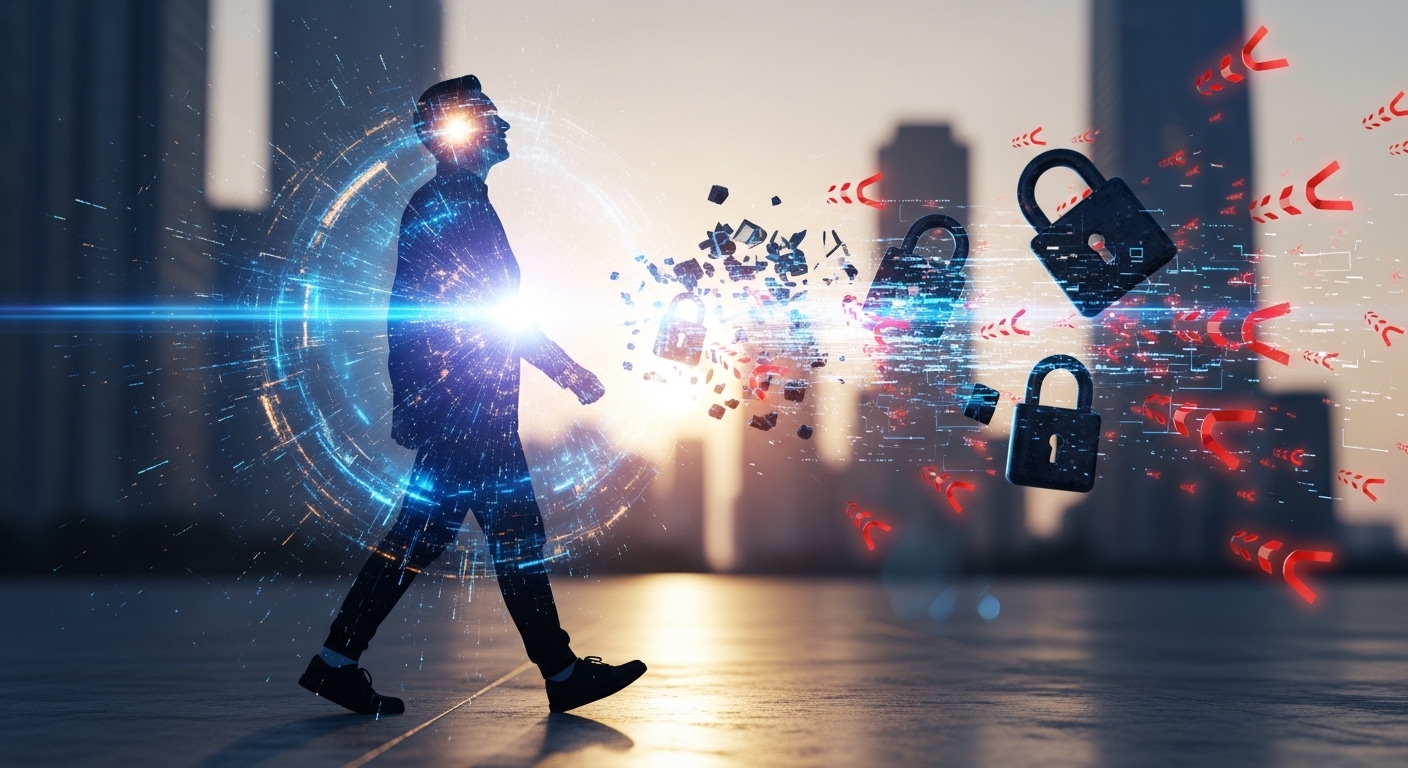
Scenario 5: What If You Could Turn Invisible?
We have talked about the scary “What Ifs.” The billboards, the spies, the algorithms, and the puppeteers. Now, let’s flip the script. Let’s talk about the most amazing, empowering “What If” of all.
What if you woke up tomorrow with a superpower? What if you had a magic ring that, when you put it on, made you completely invisible to the things that wanted to harm you?
You could walk through the chaotic, noisy city of the internet, and nobody could see you. You could walk past the aggressive salesmen shouting at you to buy their blenders, and they would look right through you. You could walk past the creepy stalkers hiding in the alleyways, and they would have no idea you were there.
You could explore the world’s largest library without anyone looking over your shoulder. You could reinvent yourself, learn a new skill, or change your mind, all without carrying the heavy, permanent anchor of your past mistakes dragging behind you. You would be a Digital Ghost. Untouchable. Free.
The Ultimate Freedom
This is not a fantasy. This superpower is real, and it is available to you right now. It is called taking your privacy back.
Privacy is the blank slate. It is the deep breath you take when you finally close the front door and lock it behind you. When you actively protect your digital footprint, you strip away the power of the tech giants and hand it back to yourself.
You stop identity thieves dead in their tracks before they can ever open a credit card in your name. If you don’t realize how devastating that crime is, you must read about what identity theft is and how to prevent it.
You protect your children, allowing them to grow up without a permanent digital record following them into adulthood. If you are a parent, learning how to keep your family’s digital privacy safe is the greatest gift you can give them.
How to Activate Your Superpower Today
You do not need a radioactive spider bite to get this superpower. You just need to make a few smart, decisive choices to lock down your digital life.
1. Starve the Beast
The first step to becoming invisible is to stop feeding the trackers. Understand that on the internet, if a service is free, then you are the product. Stop downloading random, “free” apps that ask for your location and microphone. Stop clicking “Accept All Cookies” just to make the banner go away. Take the extra five seconds to click “Reject All.”
Start using privacy-focused web browsers that automatically block third-party trackers. Learn the simple habits of how to stop websites from tracking your clicks. Every tracker you block is a camera you just smashed.
2. Cut the Anchor
The second step is dealing with the past. You cannot move forward if you are dragging a ten-year-old anchor of data behind you. You must hunt down your old, unused accounts from five years ago and permanently delete them. You have to stop leaving bits of your identity lying around in dark corners of the web. This process of getting rid of digital baggage is incredibly freeing.
3. The Ultimate Boss Move: Destroy the Data Brokers
Even if you become perfectly invisible today, you have a massive problem. The data brokers already have your past. They already have your name, your phone number, your family’s names, and your home address. And they are selling it right now.
To truly activate your superpower, you have to wipe the slate clean. You have to force the data brokers to delete your files. By law, you have the right to demand this. But the data brokers make it a nightmare. If you try to do it yourself, you will spend hundreds of hours filling out confusing forms, sending emails, and fighting with automated robots. And worse, they will just put your data back up a few months later.
This is where the professionals come in. You don’t have to fight the final boss alone.
Enter Wiperts: Your Digital Bodyguards
This is exactly why Wiperts.com was created. We are the mechanism that turns you into a digital ghost. When you hire Wiperts, you are handing the heavy hammer over to a team of privacy experts.
Our advanced software scours the darkest corners of the internet, hunting down every data broker, people-search site, and public directory that is selling your life. We find your exposed home address, your phone numbers, and your family’s details.
Then, we force them to delete it. We know their legal tricks, and we don’t let them hide. But the true superpower of Wiperts is our continuous monitoring. Because data brokers are sneaky and try to republish your data, we never sleep. If your name pops up on a shady website three months from now, our alarms go off, and we crush the file again before anyone can buy it.
If you want to know exactly how this continuous shield works, read our complete guide on understanding ongoing online privacy protection.
Conclusion: The Choice is Yours
The “What If” games are over. The reality is that the internet is a chaotic, noisy, and dangerous place. Tech companies want you to believe that you are powerless, that privacy is dead, and that you have no choice but to surrender your data for convenience.
Do not believe the lie.
The power of privacy is the power of autonomy. It is the power to say, “My life belongs to me.” It is the ability to protect your family from stalkers, your bank account from algorithms, and your mind from manipulation.
You can choose to live with the glowing billboard above your head. You can choose to let the polite stranger stand in your kitchen with a clipboard. Or, you can choose to put on the ring, activate your superpower, and become a ghost.
Stop settling for the illusion of safety. Take your life back today. Let Wiperts erase your past, so you can finally walk into the future completely free.
Ready to activate your superpower?
Stop letting data brokers sell your secrets to the highest bidder. Let Wiperts find and permanently remove your personal information from the internet today.
Become a Ghost Now